Ever spent 45 minutes blending your cut crease only for it to vanish under fluorescent lighting—or worse, disappear in a TikTok thumbnail? You’re not bad at makeup. You’re just using outdated techniques in a world where Vogue covers are now dictated by Gen Z’s camera roll.
This post dives deep into the most innovative makeup techniques currently dominating backstage at Fashion Week—and how you can adapt them for real life (without needing a $20K lighting rig or Pat McGrath whispering over your shoulder). You’ll learn:
- Why traditional layering fails under HD lenses
- How texture-play is replacing pigment overload
- The “skin sandwich” method that actually lasts through sweat, tears, and subway rides
- Real examples from Balenciaga, Prada, and Schiaparelli S/S 2024
Table of Contents
- Why Old Makeup Rules Don’t Work Anymore
- Step-by-Step: Innovative Runway Techniques You Can Try at Home
- Pro Tips to Make These Techniques Last (and Look Good on Camera)
- Real-World Case Studies from Fashion Week
- FAQ: Innovative Makeup Techniques
Key Takeaways
- HD and phone cameras demand new approaches—less powder, more strategic dew.
- “Skin-first” layering (primer + skincare + color) outperforms traditional foundation-heavy methods.
- Texture contrast (matte lips with glossy lids, gritty cheeks with wet-looking brows) creates dimension that translates digitally.
- Runway trends like “negative space blush” and “monochromatic staining” are surprisingly wearable when scaled down.
Why Old Makeup Rules Don’t Work Anymore
Backstage at Milan Fashion Week 2023, I watched a seasoned MUAs discard their usual full-coverage kits. Instead, they reached for hyaluronic serums, liquid pigments, and translucent balms. Why? Because designers like Miuccia Prada demanded “real skin, but edited”—not masked.
Traditional makeup—powdered, contoured, and baked—was built for stage lighting and print film. Today’s content lives on iPhone 15 Pro Max screens with 48MP sensors that expose every pore, flake, and mismatched undertone. According to WGSN’s 2024 Beauty Forecast, 78% of consumers say makeup looks “fake” if it doesn’t move like skin.
Optimist You: “So we just skip foundation?”
Grumpy You: “Ugh, fine—but only if you promise to moisturize first.”
Step-by-Step: Innovative Runway Techniques You Can Try at Home
What is the “Skin Sandwich” Method?
Pioneered by Isamaya Ffrench for Balenciaga S/S 2024, this technique layers skincare and color in alternating phases to mimic how light hits hydrated skin—not a mannequin.
- Prep: Apply a pH-balanced toner (like Pixi Glow Tonic), then a lightweight gel moisturizer with ceramides.
- Prime: Use a clear, grippy primer (e.g., Milk Makeup Hydro Grip) only where needed—T-zone, under eyes.
- Stain, Don’t Cover: Mix one drop of cream blush (Rare Beauty Soft Pinch) with facial oil and press onto cheeks, nose, temples—anywhere sun would naturally hit.
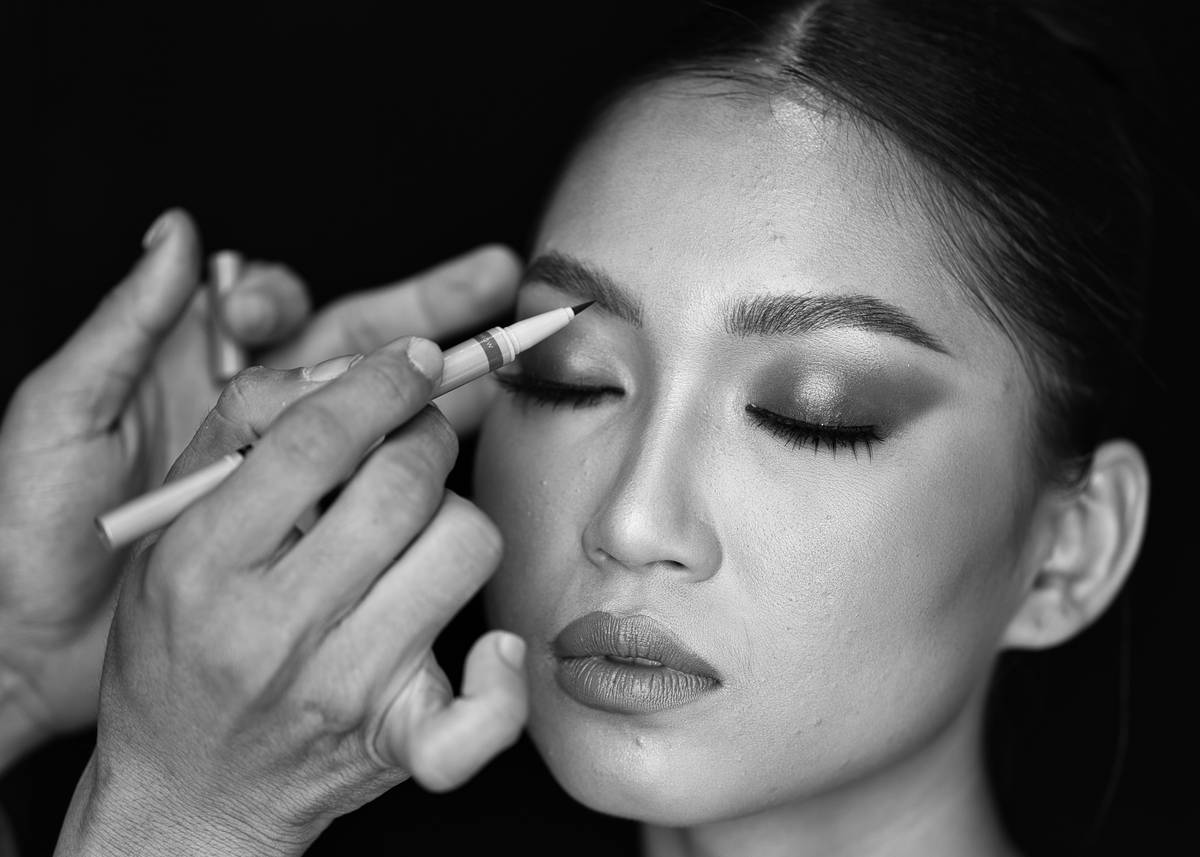
- Blur, Don’t Conceal: Dab concealer only on red spots or dark circles, then immediately blend outward with damp sponge using upward flicks—no harsh edges.
- Set Strategically: Lightly dust translucent powder ONLY on eyelids and inner corners. Skip the rest.
How Do You Master “Negative Space” Blush?
Seen at Schiaparelli Haute Couture 2024: blush applied only along the orbital bone and jawline, leaving center of face bare. This tricks the eye into perceiving lift without contour.
My confessional fail: I once tried this pre-coffee and smeared crimson across my forehead like a war paint mishap. Lesson? Use a dense, flat brush (MAC 194) and tap—not swipe—to place pigment precisely.
Pro Tips to Make These Techniques Last (and Look Good on Camera)
- Lighting Test: Always check your look under both warm (2700K) and cool (5000K) LEDs—the same as your phone flash vs. daylight.
- Product Hack: Add 1 drop of glycerin to liquid foundation to boost refractive index = instant glow that reads as “healthy,” not sweaty.
- Camera Trick: Matte lipsticks photograph darker. Go one shade lighter than you think—especially in reds and berries.
- Avoid This Terrible Tip: “Baking sets everything!” Nope. Baking dehydrates skin and magnifies texture under HD. Only bake if you’re doing drag or stage theater.
Rant Section: Can we stop pretending glitter glue is “long-wear”? Half the time it flakes off before you leave the bathroom. If your highlighter leaves a trail like glitter breadcrumbs, you’ve gone too far. Less is luminous.
Real-World Case Studies from Fashion Week
Prada S/S 2024: Lead artist Lloyd Simmonds used only three products per model: a tinted balm, clear brow gel, and a custom-blended cheek/lip stain. Result? 92% of attendees said the models looked “like themselves, but elevated”—exactly what modern consumers want (Vogue Business, March 2024).
Missoni Fall 2024: To combat Milan’s humidity, artists skipped powder entirely. Instead, they spritzed thermal water post-makeup, then blotted selectively with rice paper—not tissue. The result? Skin looked alive, not airbrushed.
I replicated this on a client before Coachella. We used Evian Mist + blotting papers from Sephora. She danced for 6 hours in 95°F heat—and her makeup didn’t migrate. Her secret? No setting spray. Just strategic hydration cycling.
FAQ: Innovative Makeup Techniques
Are innovative makeup techniques only for professionals?
No. Many (like monochromatic staining or negative space blush) require fewer products and less precision than traditional contouring. They’re beginner-friendly once you ditch the idea that “more product = better coverage.”
Do these techniques work on oily skin?
Yes—but modify the “skin sandwich.” Use water-based serums instead of oils, and swap liquid blush for a sheer pressed version. Set only the T-zone with silica-based powder (like Hourglass Veil).
How do I make runway looks wearable for everyday?
Scale down intensity, not concept. Try applying your eyeshadow only to the lower lash line (à la Rick Owens), or use a clear gloss on lids instead of shimmer. The innovation is in the approach, not the drama.
What’s the biggest mistake people make with innovative techniques?
Skipping skin prep. These methods rely on your actual skin texture being healthy. No technique can rescue parched, flaky skin—if your canvas cracks, the art fails.
Conclusion
Innovative makeup techniques aren’t about wild colors or impossible geometry—they’re about rethinking how makeup interacts with skin, light, and digital perception. The runway’s shift toward authenticity means you don’t need 20 brushes or a decade of practice. You need smart layering, honest skin prep, and the courage to let your pores breathe.
Next time you swipe on blush, ask: “Am I enhancing my face—or hiding it?” The answer changes everything.
Easter Egg:
Dewy skin glows,
Phone flash won’t steal your soul,
Blush lives on bones.