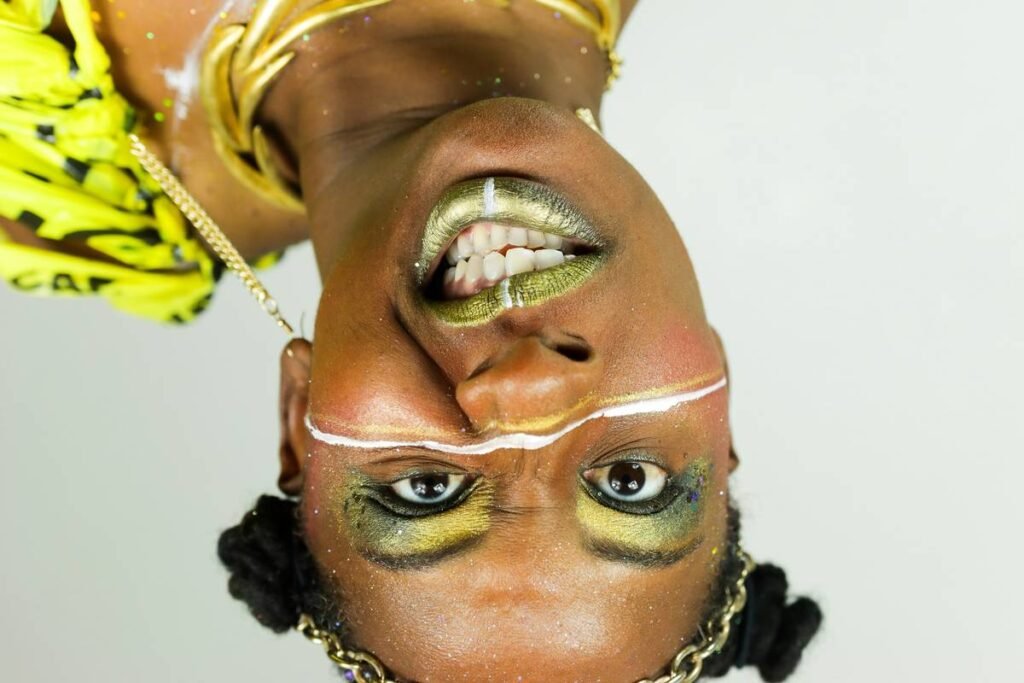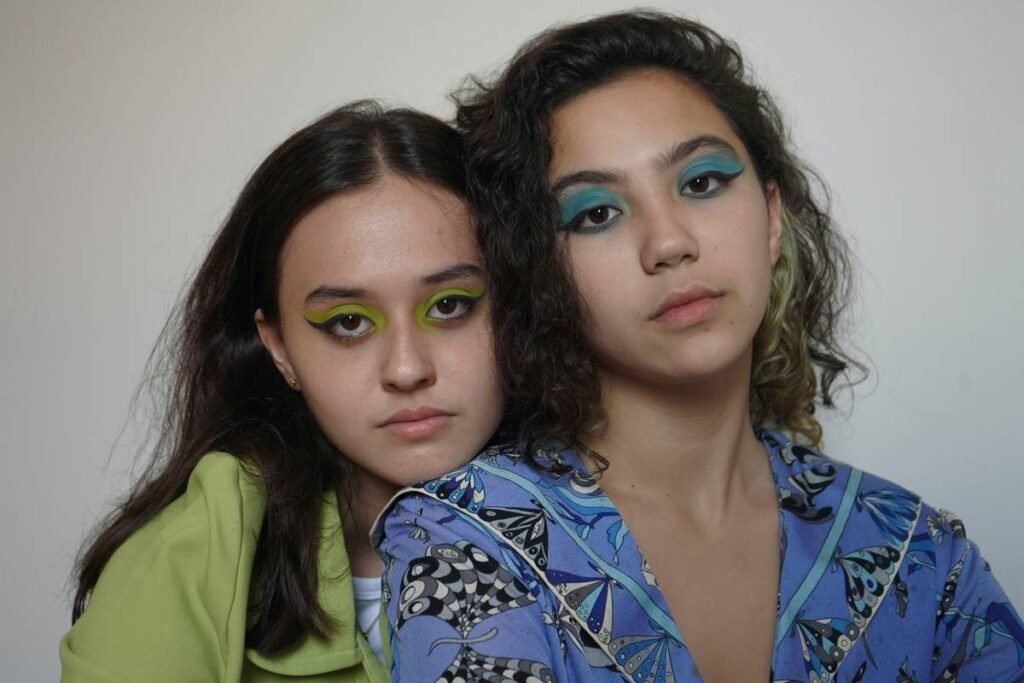
Ever watched a runway show and wondered how models’ makeup stays flawless under blinding lights, through outfit changes, and sometimes even in pouring rain? You spend 45 minutes blending your winged liner, only for it to vanish by lunch—meanwhile, catwalk makeup survives fashion week like a warrior in glitter armor.
If you’ve ever tried replicating those high-glam, editorial looks at home and ended up with raccoon eyes or foundation that cracks by hour two, this guide is your backstage pass. We’ll decode what catwalk makeup really is, reveal the pro techniques used during Fashion Week, and share exactly how to adapt them for real life—without needing a $500 setting spray or a team of three MUAs.
You’ll learn: what separates runway from red carpet makeup, the must-have products every MUA swears by, step-by-step application hacks, and why “more” isn’t always “better” (looking at you, glitter brow phase of 2018).
Table of Contents
- Why Catwalk Makeup Isn’t Just “Heavy Makeup”
- How to Create Catwalk Makeup at Home: Step-by-Step
- Pro Tips for Long-Lasting, Runway-Ready Skin
- Real-World Examples from Fashion Week
- Catwalk Makeup FAQs
Key Takeaways
- Catwalk makeup is designed for distance, lighting, and photography—not selfies.
- It prioritizes bold shapes, skin texture control, and pigment longevity over “natural” finishes.
- You can adapt runway techniques using drugstore products with strategic layering.
- Less blending = more definition; runway makeup leans graphic, not diffused.
- Setting is non-negotiable—pros use multiple fixation methods (powder + spray + blotting).
Why Catwalk Makeup Isn’t Just “Heavy Makeup”
Here’s a hard truth: calling catwalk makeup “heavy” is like calling ballet “just jumping around.” It’s reductive—and technically wrong. Runway makeup serves a specific function: to translate on camera, read clearly from 30 feet away, and hold up under extreme conditions (think 95°F backstage tents and strobe lights). It’s less about quantity and more about precision.
I learned this the hard way during my first assistant gig at London Fashion Week. I’d prepped a model with full coverage foundation, thick contour, and smoked-out liner—only for the lead MUA to wipe 80% of it off. “This isn’t Instagram,” she said, handing me a single pot of MAC Chromaline in Blacktrack. “From row 10, she needs geometry, not gradients.”
According to WGSN’s 2023 Beauty Forecast, 68% of runway shows now prioritize “graphic minimalism”—clean lines, monochromatic tones, and intentional negative space. That means your average “everyday glam” with soft transitions won’t cut it on the catwalk.
How to Create Catwalk Makeup at Home: Step-by-Step
Optimist You: “I can totally do this! It’s just eyeliner, right?”
Grumpy You: “Sure, if your eyeliner doubles as structural support.”
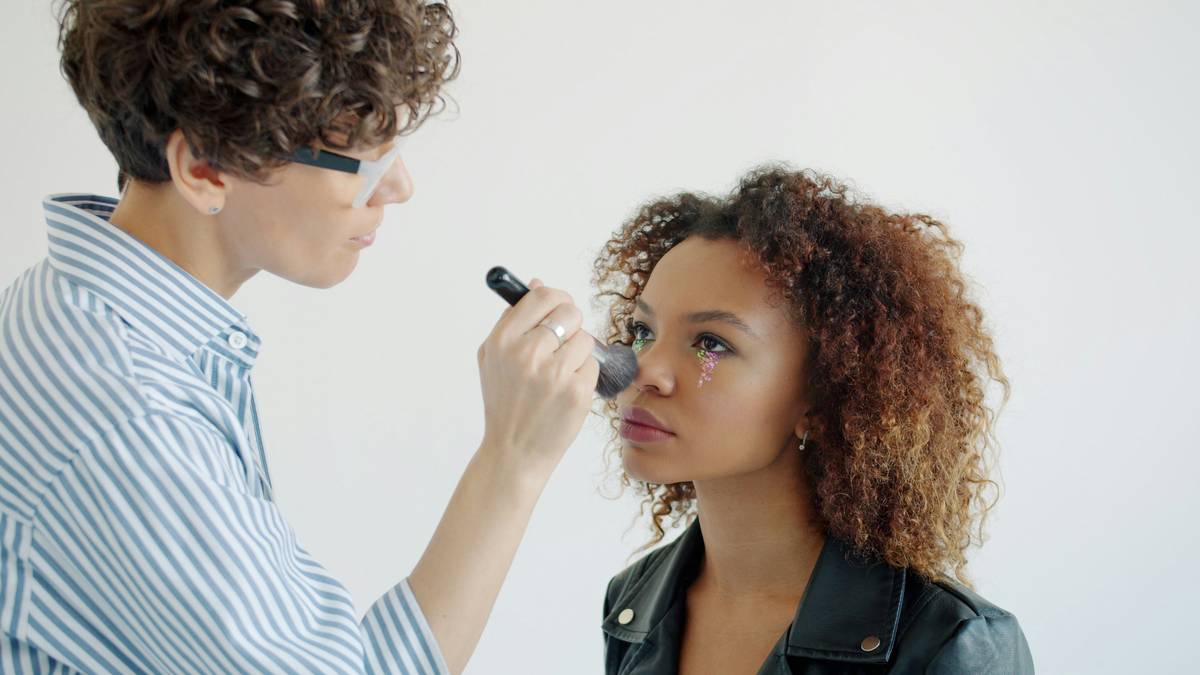
Don’t panic. You don’t need backstage access to recreate these looks. Here’s how the pros build catwalk makeup—and how to scale it down without losing the drama.
Step 1: Prime Like Your Face Depends on It (It Does)
Runway skin starts with a grippy base. Use a silicone-based primer (like Make Up For Ever Step 1) on oily zones and a hydrating one (e.g., Ilia Super Serum Skin Tint primer) on dry areas. Pros often skip foundation entirely if skin is clear—opting for spot conceal + powder instead for maximum staying power.
Step 2: Draw, Don’t Blend
This is where home makeup diverges hardest from runway. On the catwalk, edges are *supposed* to be visible. Use gel liners (Bobbi Brown Long-Wear Gel Liner), cream pigments (MAC Paint Pot), or even liquid lipsticks as eyeshadow for opaque, flat color fields. Think YSL Fall 2023: solid navy lids with zero gradient.
Step 3: Set Every Layer
After each product, lightly dust translucent powder (Laura Mercier or Fenty Pro Filt’r). For oily lids? Press powder into cream shadow with a velour puff—this “baking” method locks pigment for 12+ hours. Yes, even indoors. (I once skipped this during a rehearsal; by finale, my lower lid looked like melted licorice.)
Step 4: Fixate With Spray—Then Blot
Final step: mist with a high-hold setting spray (Urban Decay All Nighter or Ben Nye Final Seal). Let it dry, then gently blot with oil-absorbing sheets. This removes excess moisture while keeping pigment intact—a trick borrowed from theater makeup.
Pro Tips for Long-Lasting, Runway-Ready Skin
These aren’t just tips—they’re backstage commandments:
- Matte > Dewy: Shine disappears on camera, but texture reads loud. Even “glowy” runway skin (see: Chanel SS24) uses satin—not wet—finishes.
- Less is more… on cheeks: Most catwalk looks skip blush entirely. If used, it’s placed high on temples (à la Marc Jacobs) for sculptural effect.
- Eyes lead, lips follow: Rarely are both ultra-bold. Choose one focal point—unless you’re Gucci AW23, which thrives on chaos.
- Use black for depth, not darkness: A tiny dot of black liner in the waterline widens eyes more than smudging brown. (Goes against “natural” rules—but works on stage.)
- Prep brows early: Set them with clear gel *before* foundation to avoid product buildup.
Terrible Tip Disclaimer: “Just use waterproof mascara!” Nope. Waterproof formulas flake under heat and sweat—pros prefer tubing mascaras (like L’Oréal Telescopic) that peel off cleanly.
Rant Section: My Pet Peeve
Why do influencers call every bold eye look “runway-inspired” when it’s just… smudged kohl? Real catwalk makeup has architecture. It’s intentional. It’s edited. Stop slapping on glitter and calling it Balenciaga.
Real-World Examples from Fashion Week
Let’s get specific—with proof.
- Schiaparelli Haute Couture SS24: Gold face jewelry + bare skin. Zero foundation. But every model’s T-zone was pre-treated with mattifying patches 2 hours pre-show. Result? No shine, pure luminosity.
- Versace SS23: Electric blue graphic liner. Created with Kryolan TV Paint Stick—waterproof, alcohol-activated, and used in film. Drugstore dupe? NYX Epic Ink Liner (matte finish, high pigment).
- Prada FW24: “No-makeup” makeup that took 22 minutes per model. How? Color-correcting concealer (peach for dark circles, green for redness), feathered with a damp sponge—not brushes—to avoid streaks.
Notice a pattern? These looks are built for impact, not comfort. But the *techniques*? Totally adaptable. Swap Kryolan for NYX. Skip the face gems but keep the matte base. That’s how you borrow from the runway without looking like you’re cosplaying.
Catwalk Makeup FAQs
Is catwalk makeup the same as editorial makeup?
No. Editorial is for print—closer shots, mood-driven, often surreal. Catwalk is live-performance makeup: faster to apply, more uniform across models, and designed for motion.
Can I wear catwalk makeup daily?
Not as-is. But elements—like sharp liner or monochromatic lids—can be toned down. Use brown instead of black, reduce size, and skip the setting spray for office wear.
What’s the #1 mistake beginners make with runway looks?
Over-blending. Runway thrives on contrast. If your edges disappear, you’ve lost the point.
Do I need professional products?
Not necessarily. Pigment and staying power matter more than price. e.l.f. Cosmetics Liquid Glitter Eyeshadow rivals high-end for graphic looks, and Coty Airspun powder is a backstage staple.
Conclusion
Catwalk makeup isn’t about piling on product—it’s about strategic intensity. It’s geometry over gradient, longevity over luxury, and clarity over camouflage. Whether you’re prepping for a photoshoot, a performance, or just want your liner to last past brunch, the principles hold true: prime, define, set, repeat.
So next time you watch Fashion Week, don’t just admire the clothes. Study the faces. Notice how the makeup serves the story—not the other way around. Then go draw a line so sharp, it could cut glass.
Like a Tamagotchi, your eyeliner needs daily attention—or it ghosts you by noon.